- Monday, 13, 2020
- Tucson, Arizona
- Sonora Desert Museum
Here kitty, kitty….
- Mountain lion
- “On the prowl”
- What could be more interesting than me?
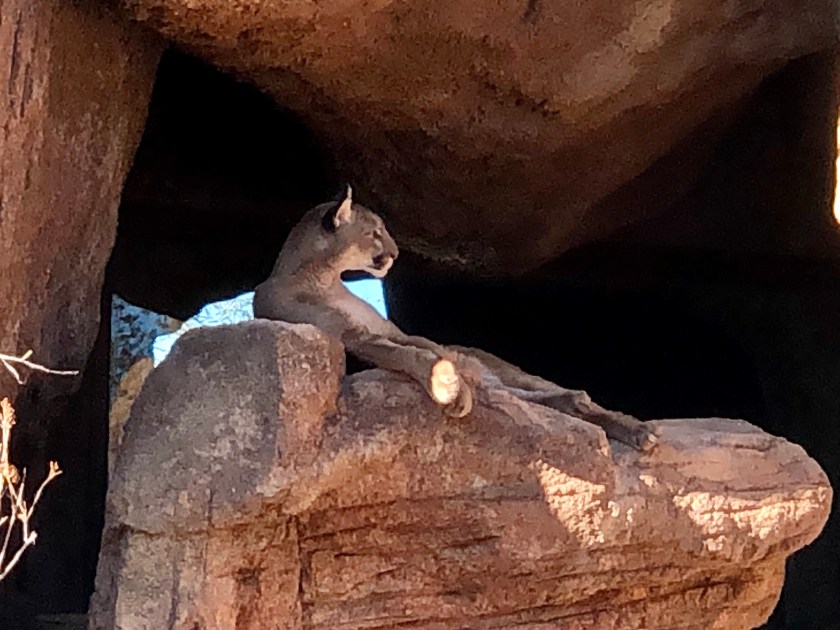


Here kitty, kitty….
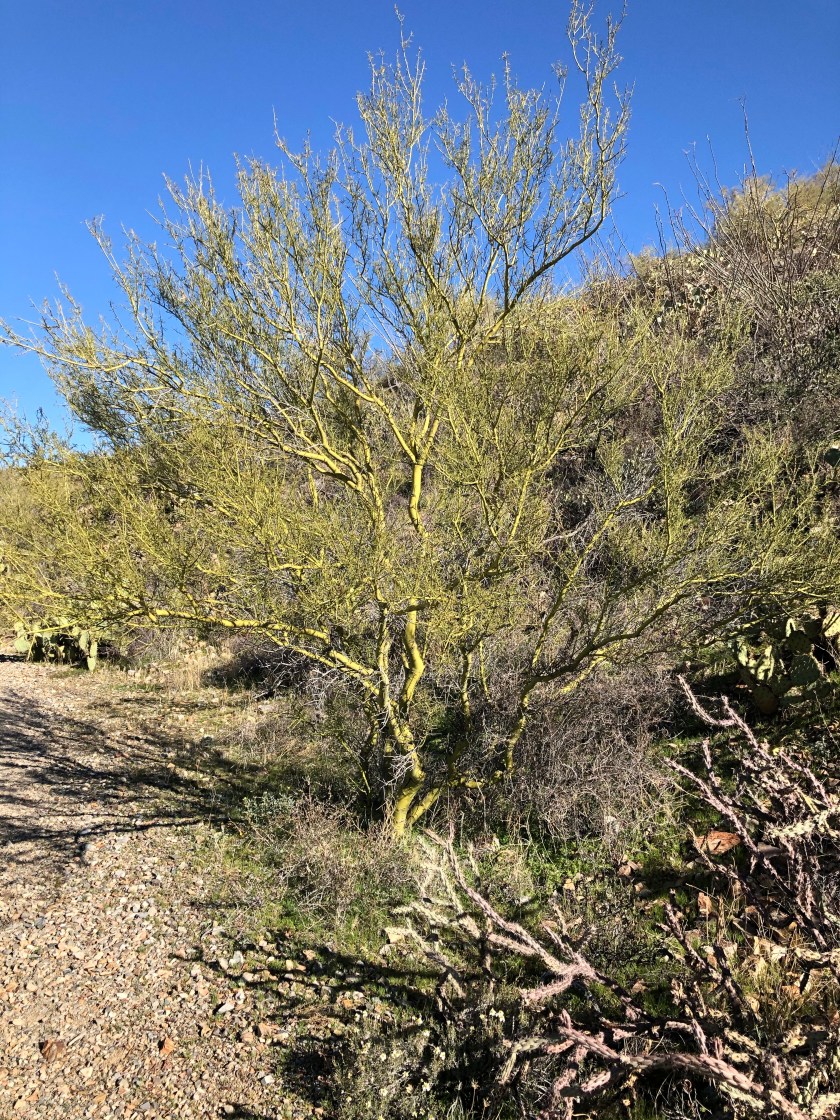
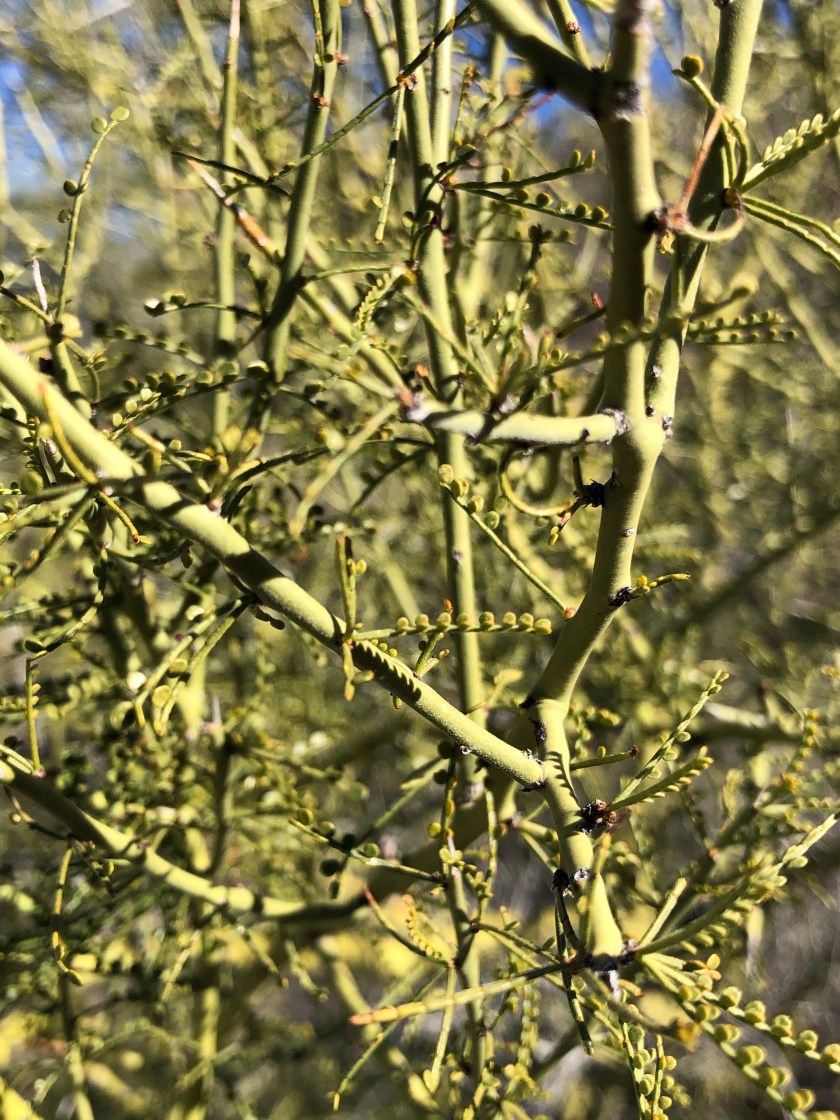
Adaptation keeps plants alive. Creosote trees have minuet wax-like coated leaves. Even with the leaves shed during droughts, photosynthesis can still occur as the green bark is rich in chloroform.
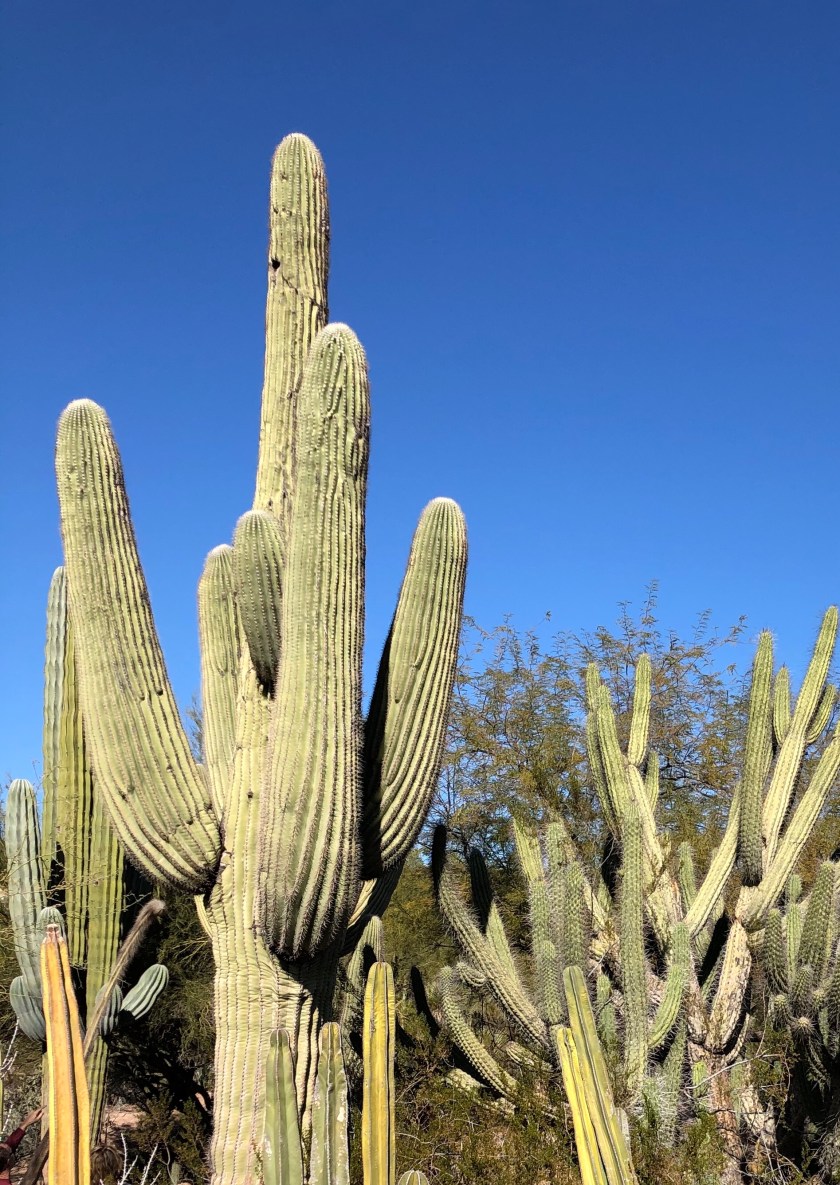
The trunk of a Saguaro tree is pleated. During rain, water is stored in expandable pleats which actually increase the circumference of the trunk.
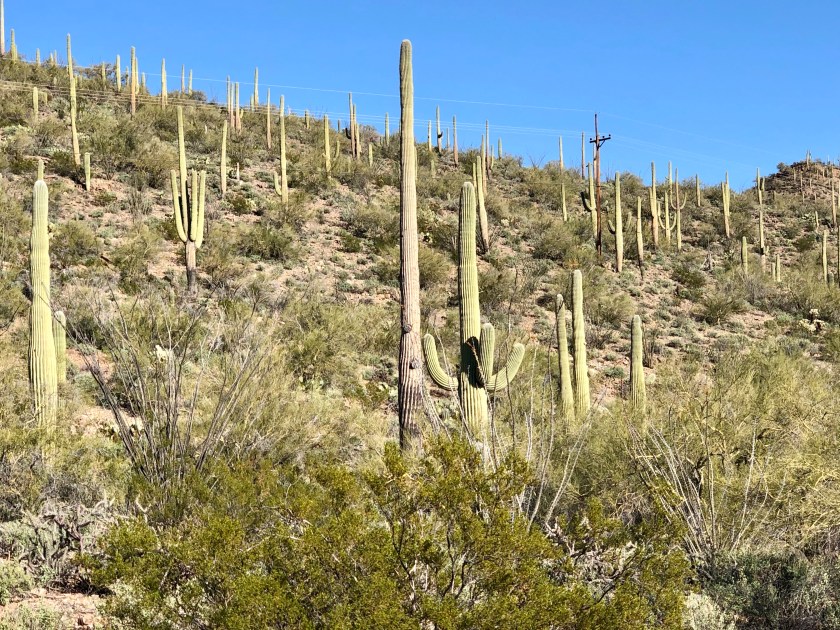
For the hike, I paired with another female solo walker. Imagine our surprise when we were passed by an older man, all in black, without water.

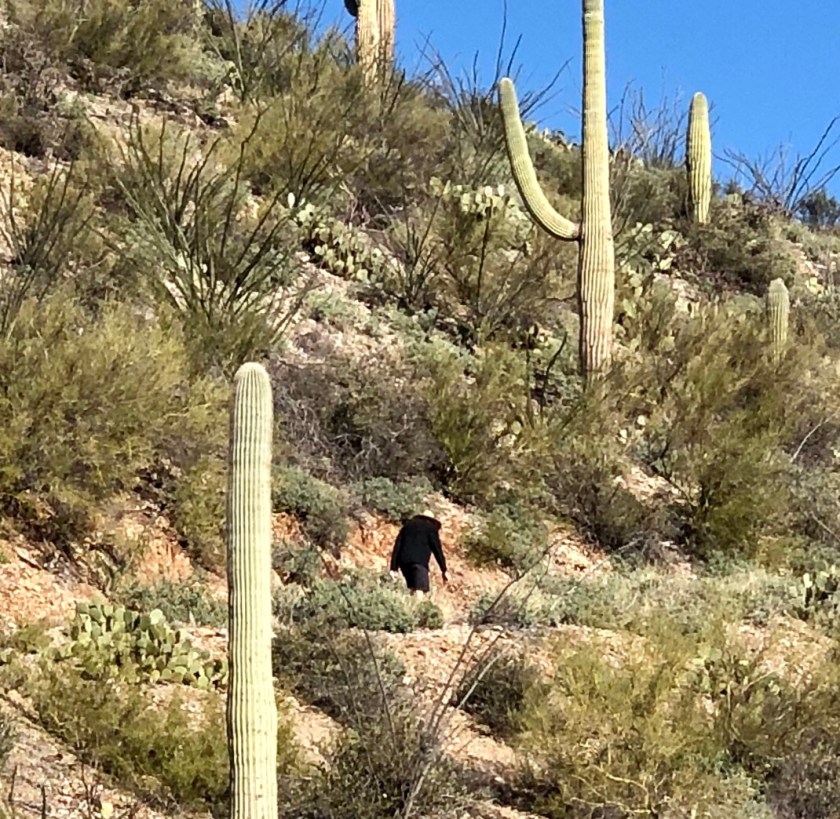

Saguaros forest. It’s like pencils poked in a giant sand.



Saguaro primer…Saguaro (suh-wah-roe) can grow 40 feet tall and often exceed 150 years. Their side arms can appear at 75 to 100-years. Sometimes no side arms form and those Saguaro are called spears. It’s native to the Sonora Desert and the blossom is Arizona’s state wildflower. A familiar image on Arizona licenses 🌵.


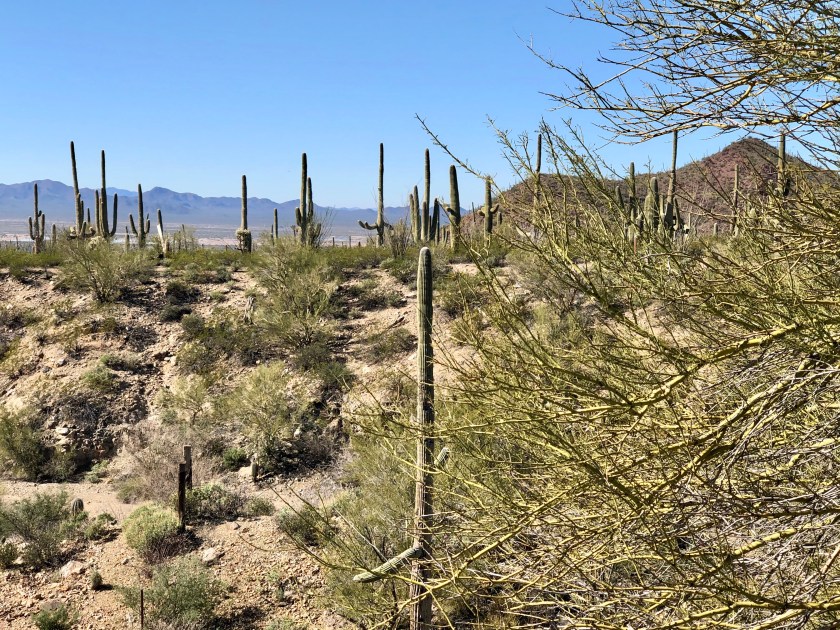
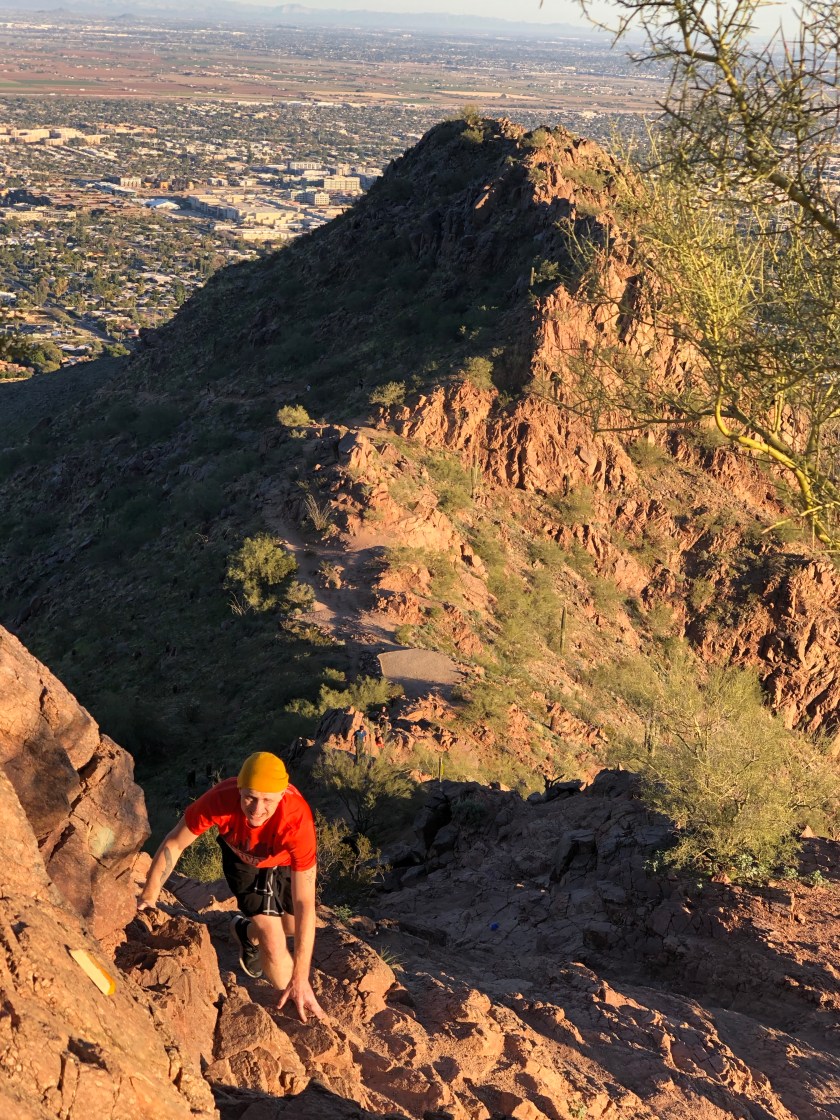
Iconic Camelback Mountain forms Phoenix’s backdrop. It’s quite the hike.
Half-way up the Cholla Trail is a helicopter pad. What might that be for?
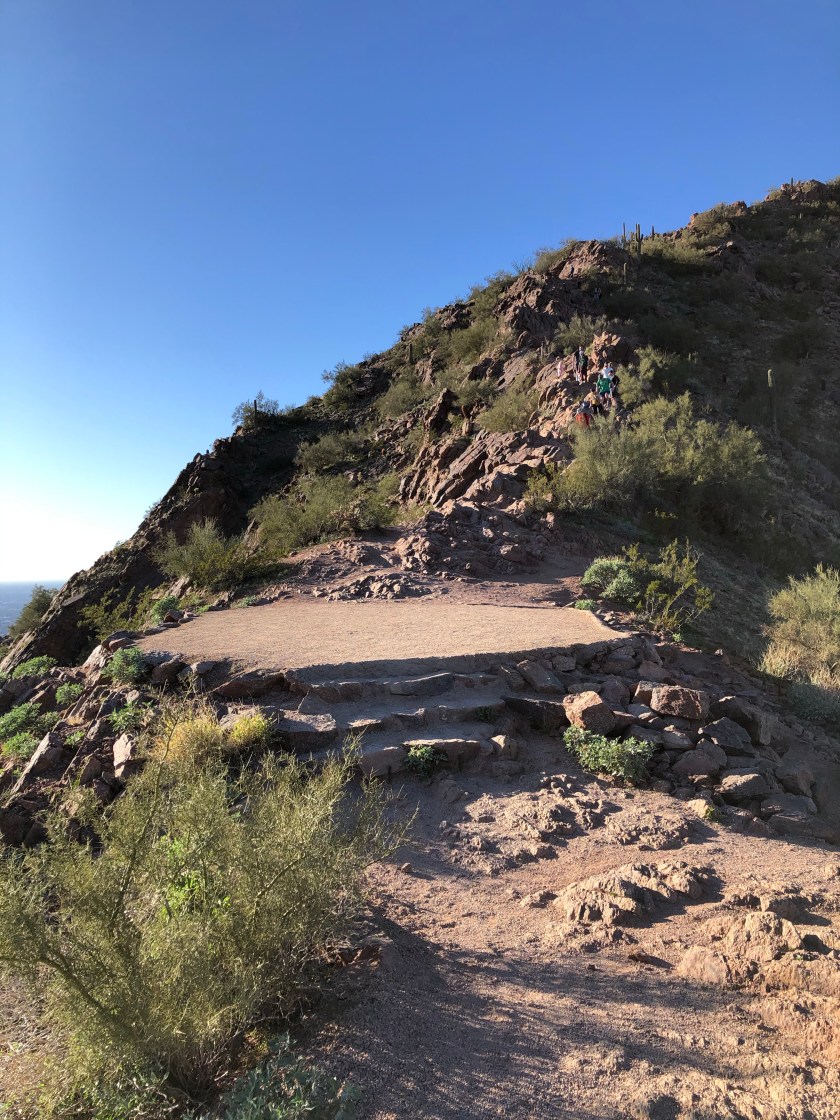



Caught me eye…
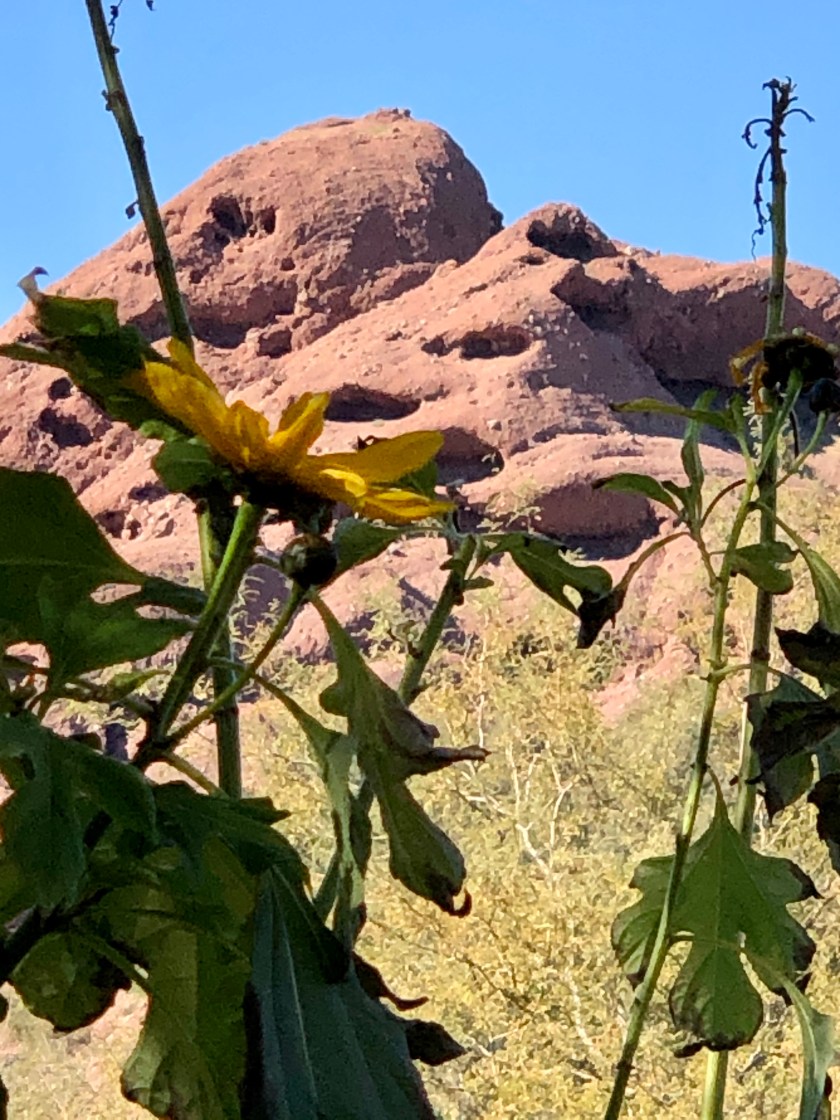

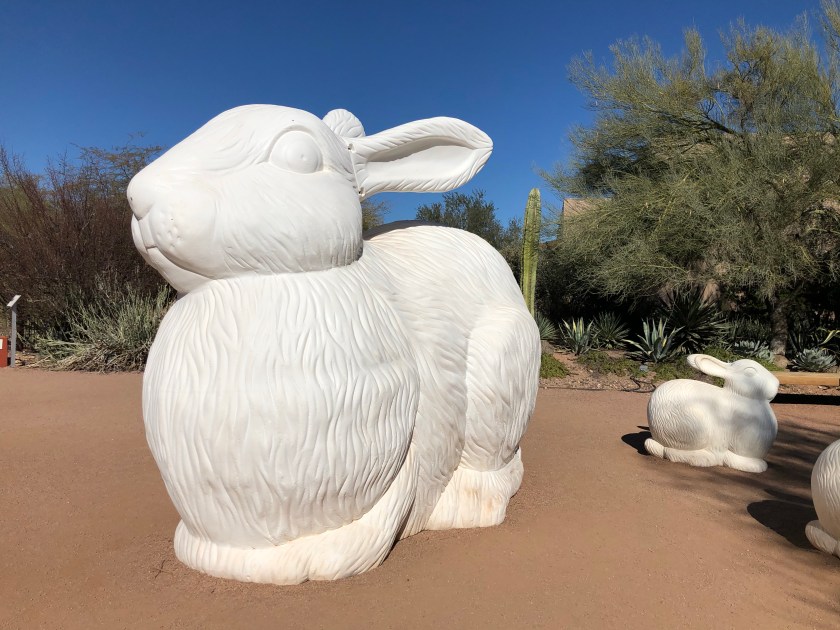
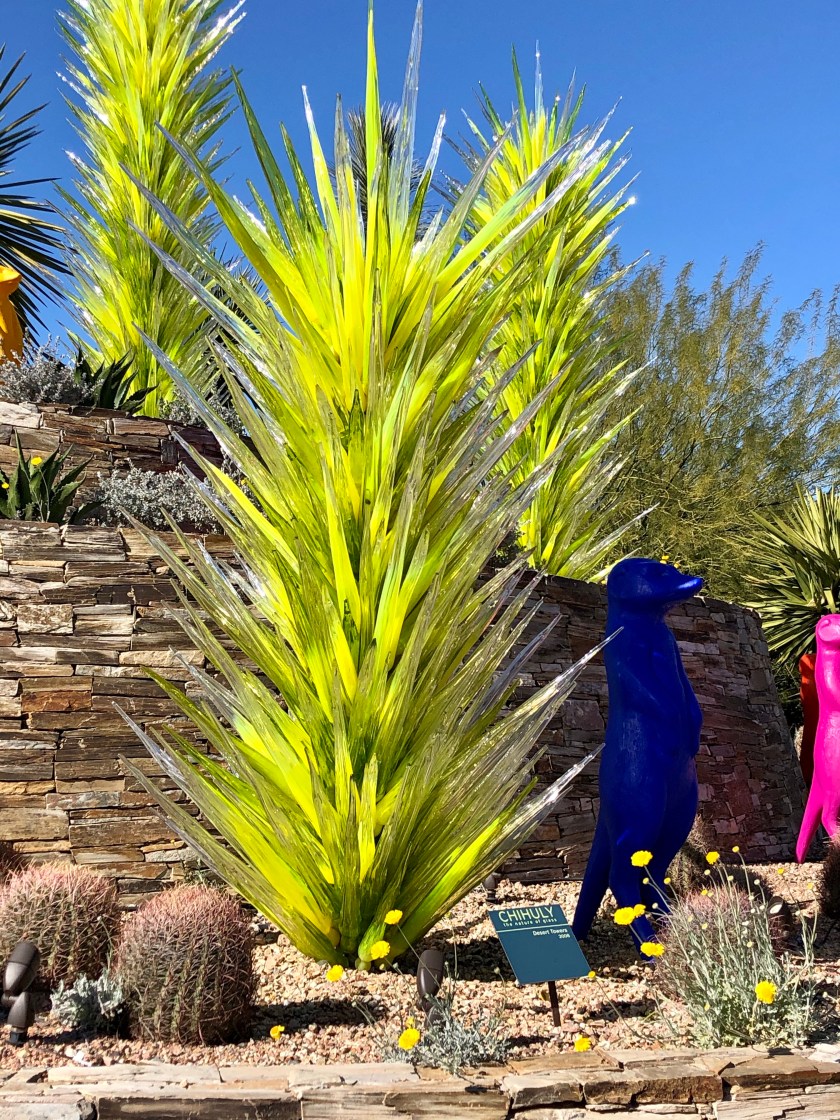
Who’s who?

Desert “bare bones” primer:
Which of the four types of North American deserts are found in Arizona?
Arizona is the only state to have all four!


What could be more appreciated than a place of tranquility within an urban location? Good fortune as the garden assistant was from Japan. Naturally we reminisced about Japan and our longing to return. Her soft voice, bowing posture, and a smile incorporating her entire face brought warm memories of Japan for me.
Shachi is the mythical fish that sprays water and causes rain. Since the 15-century, they have been used as charms against fire and can be found on the ridge of roofs.


 Linda Scandore