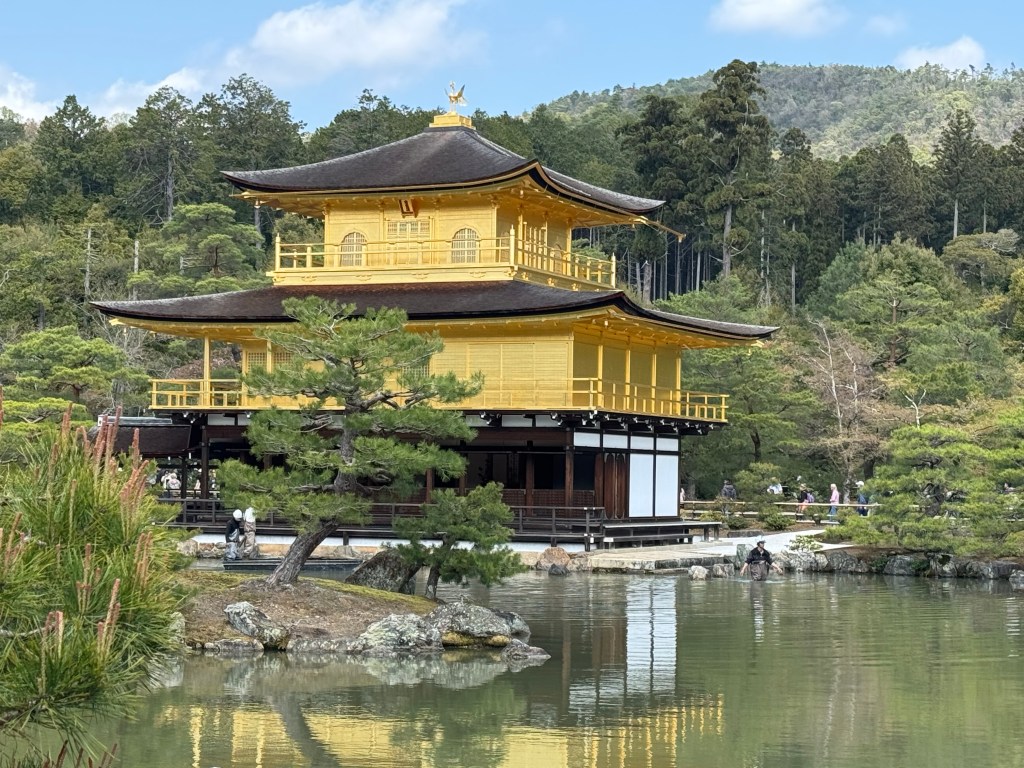
Kinkaku-ji is Temple of the Golden and a Zen Buddhist temple. The top two floors are covered with gold leaf. It was believed that gold purified any negativity towards death. How Zen.
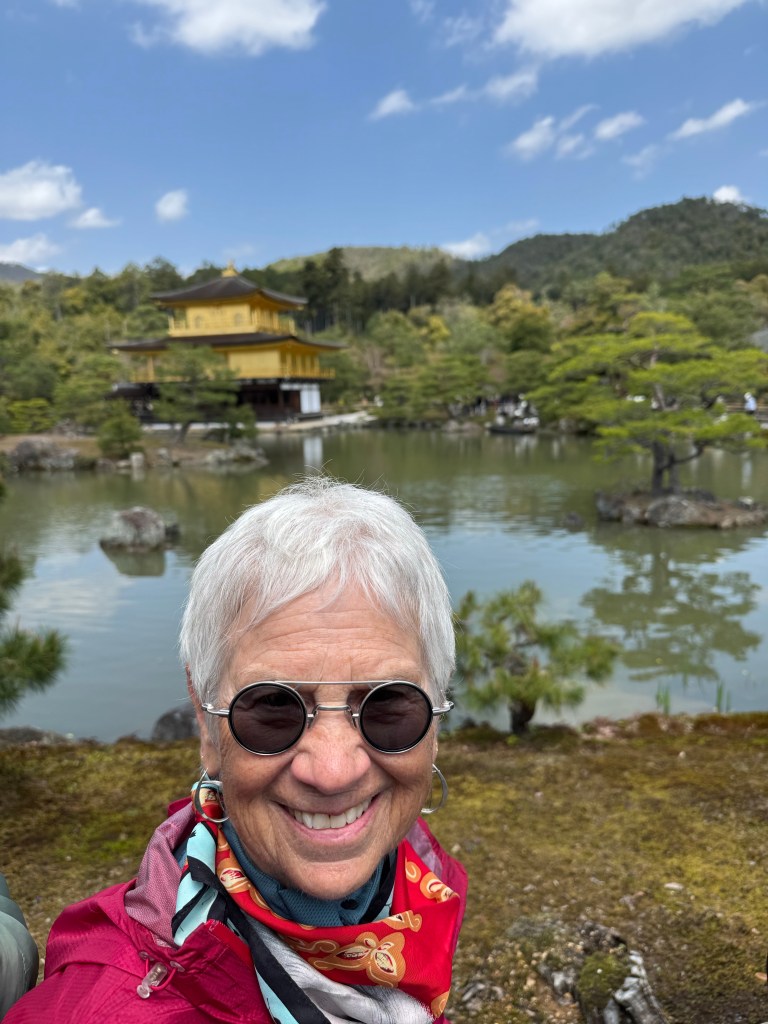
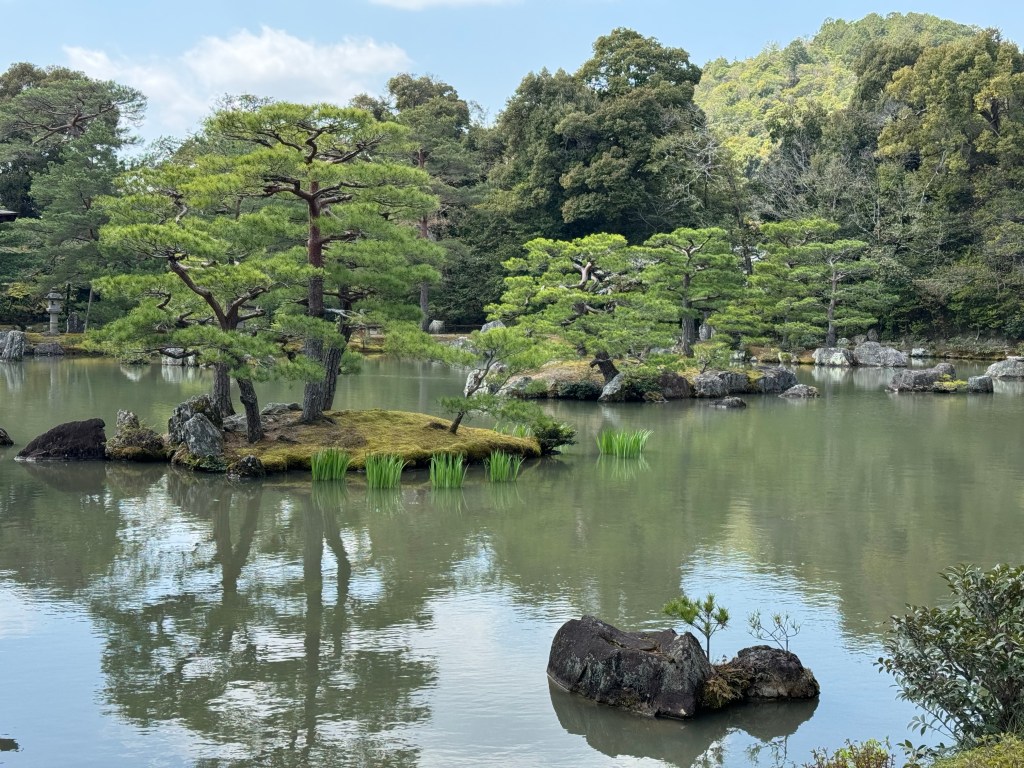
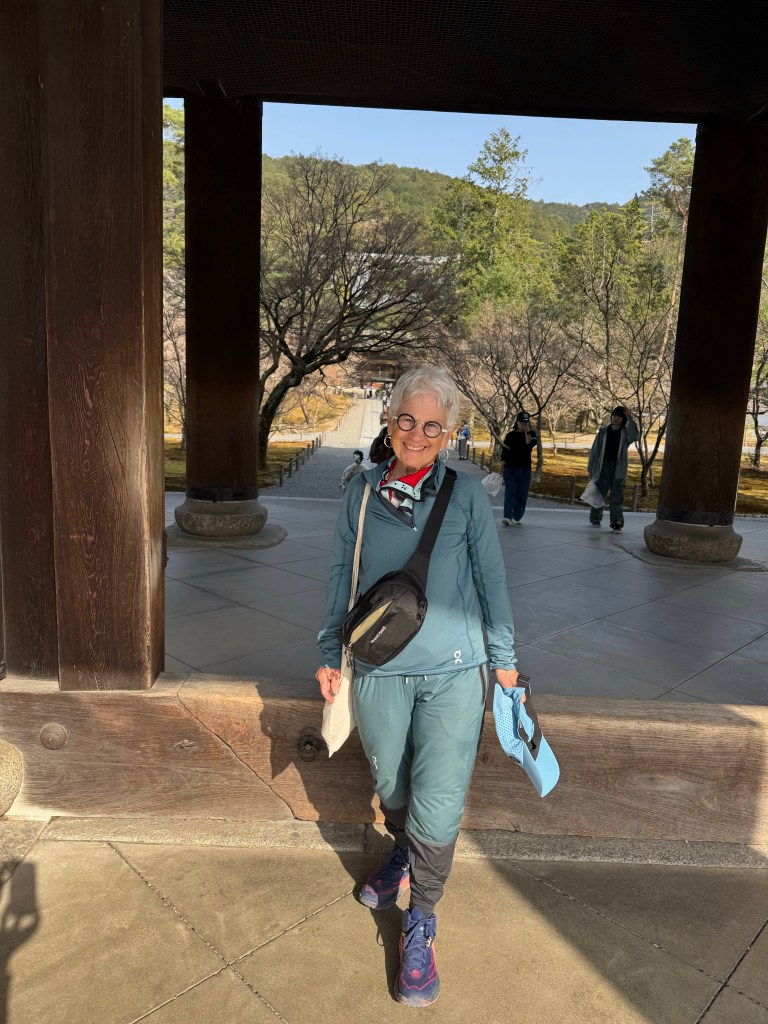
Golden Temple. Golden Temple.Linda at the Golden Temple. Golden Temple’s pond.
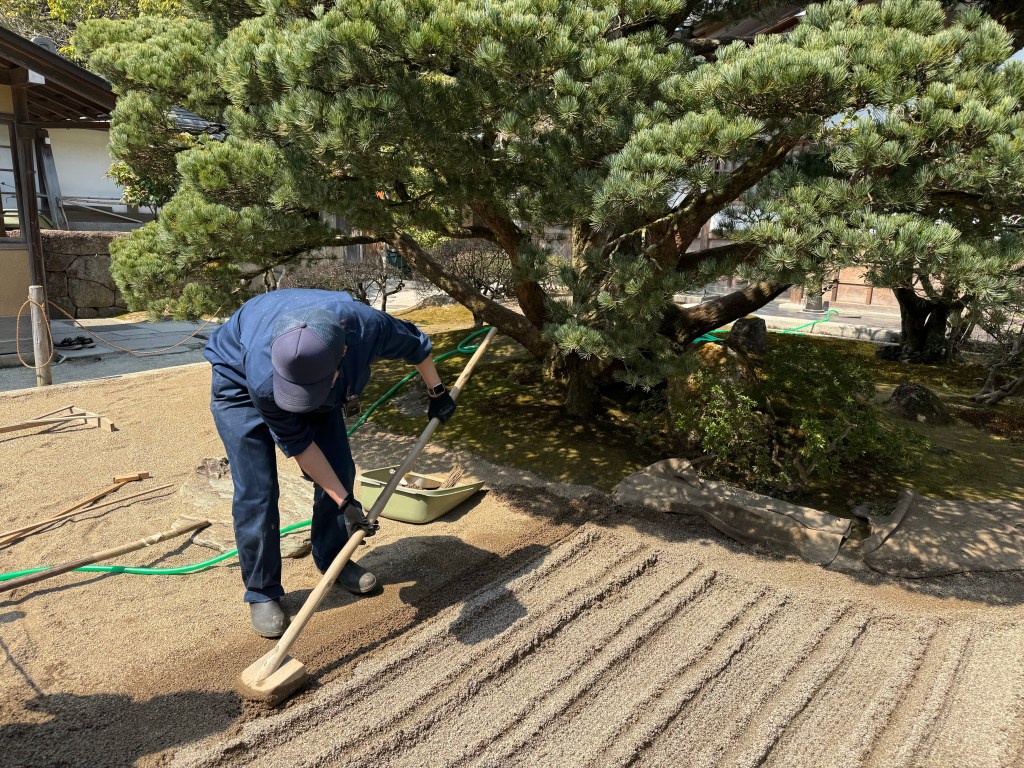
When was the last time you got paid to play in the sand? After a year of training, this gardener is spending his first day making his own creation. The tension was palpable when his master approached.
650 year old tree in background. The sand garden leads water to the tree. Thanks to Saburo for correcting date❤️.Apprentice trenching.Trenching. Just so pressure applied.All sand. No glue.
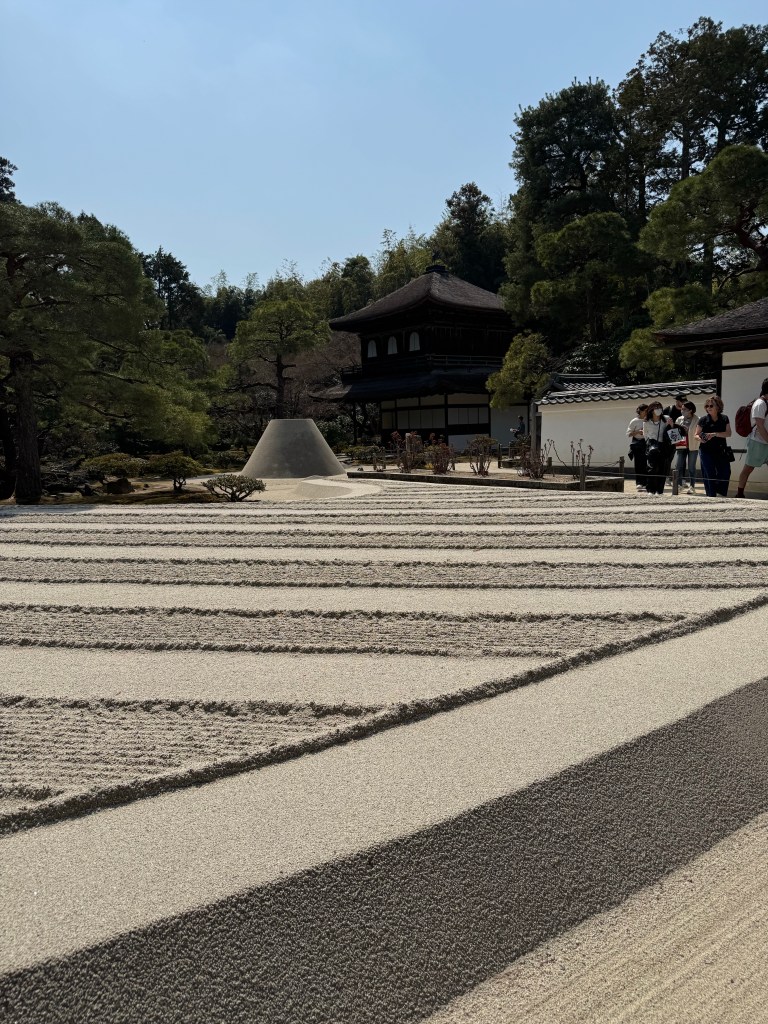
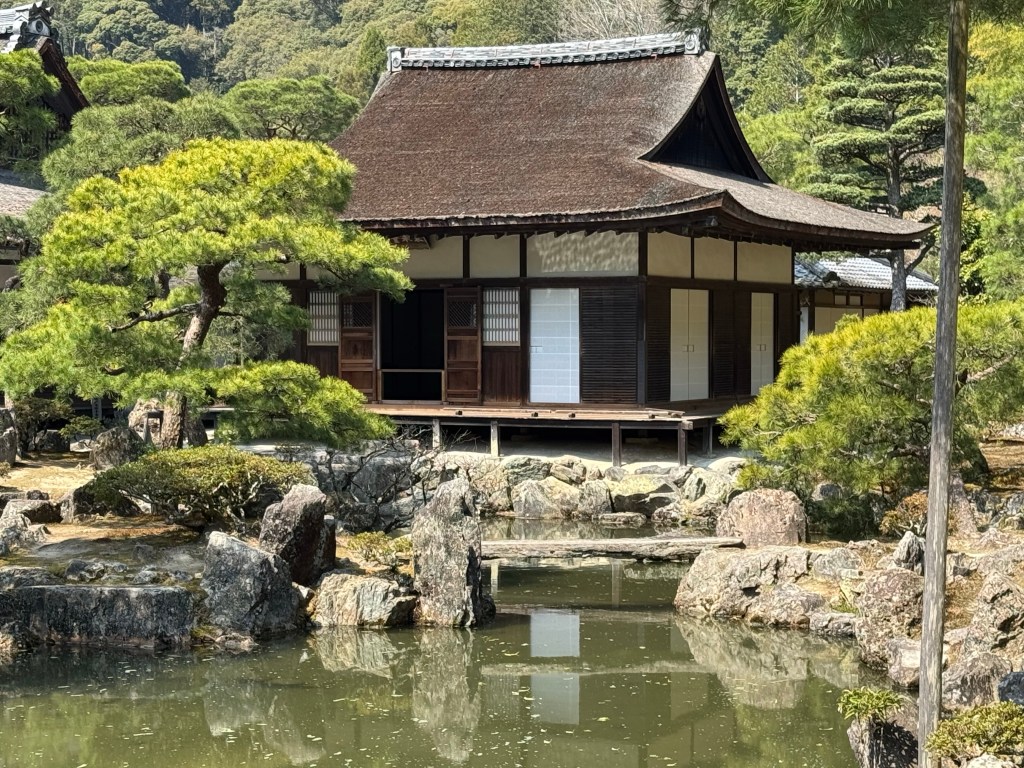
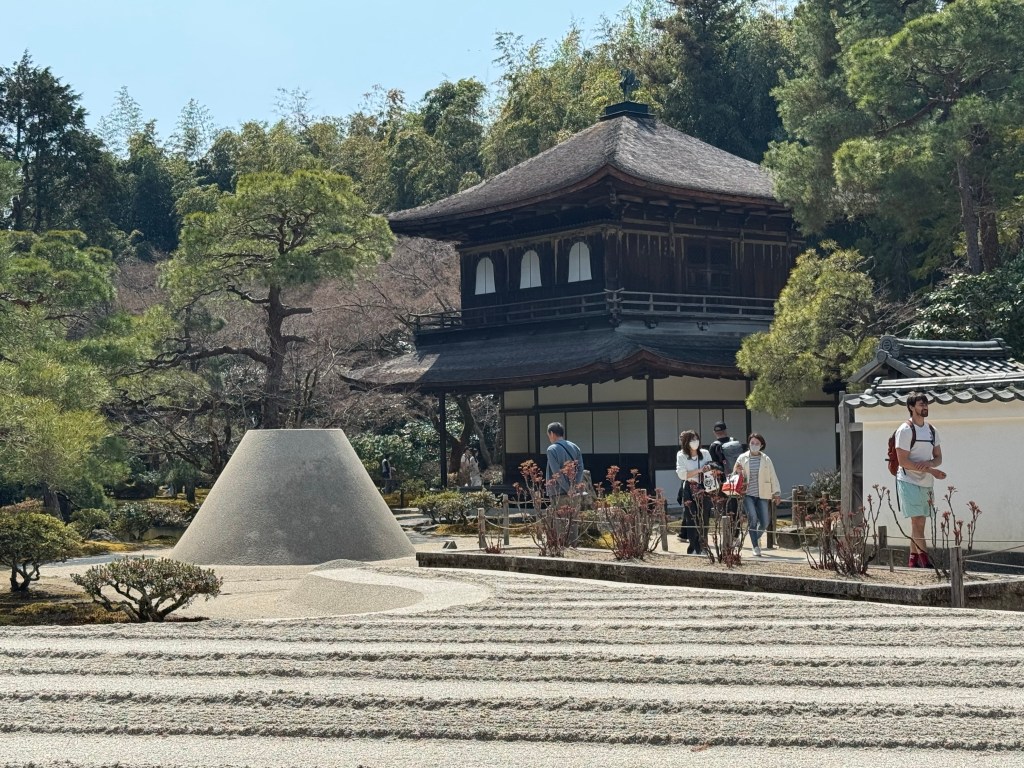
Ginkaku-ji Temple (Silver Temple) is perhaps the Japanese’s favorite temple because of its simple elegance. The temple is in perfect balance and harmony with its serine gardens. Silver Temple has mastered the art of less is best.
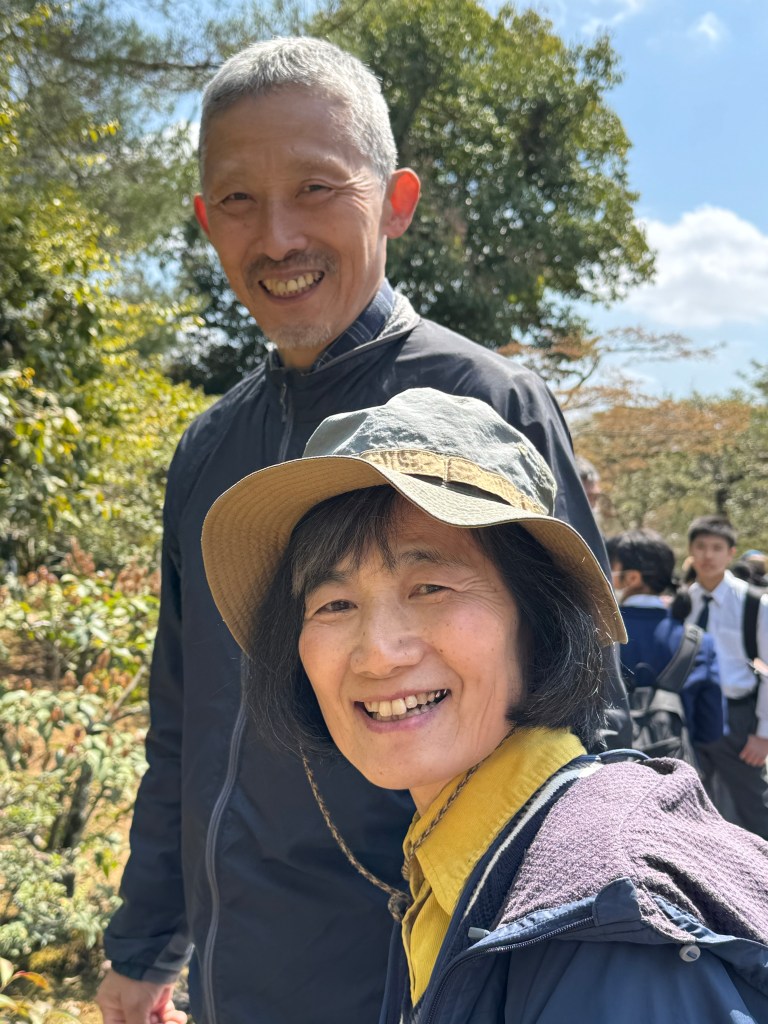
Harmony Sand garden. Yes, that flat top triangular shape is a sand structure,Garden. How much fun can three people have? Linda, Namiyo and Saburo.
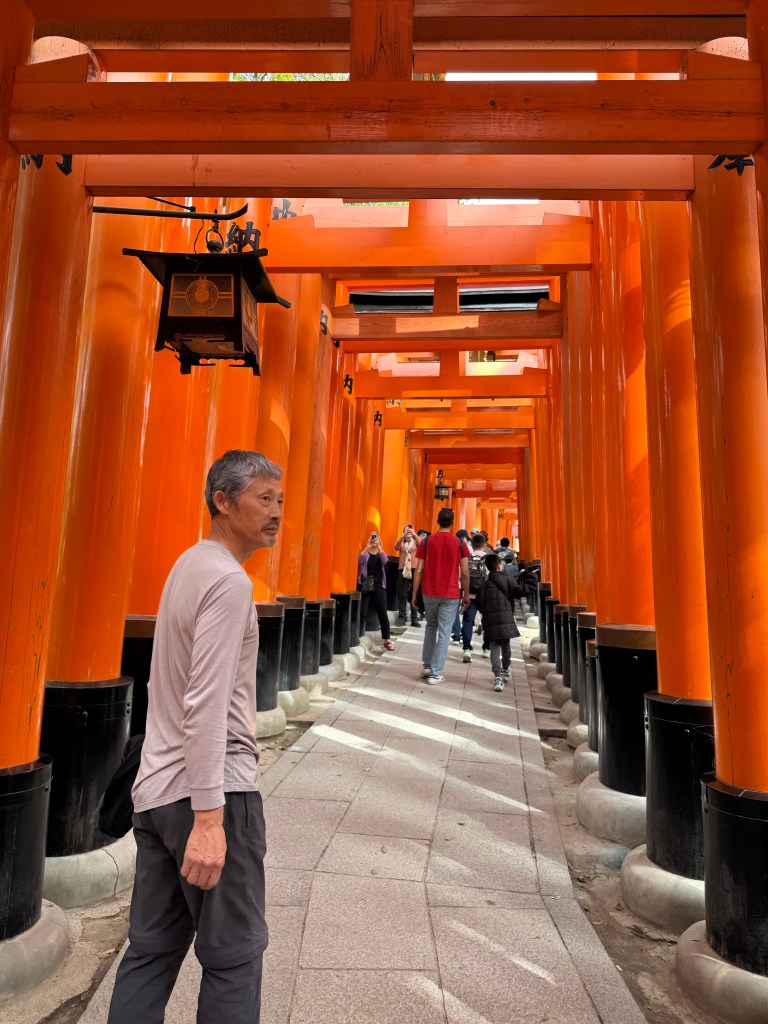
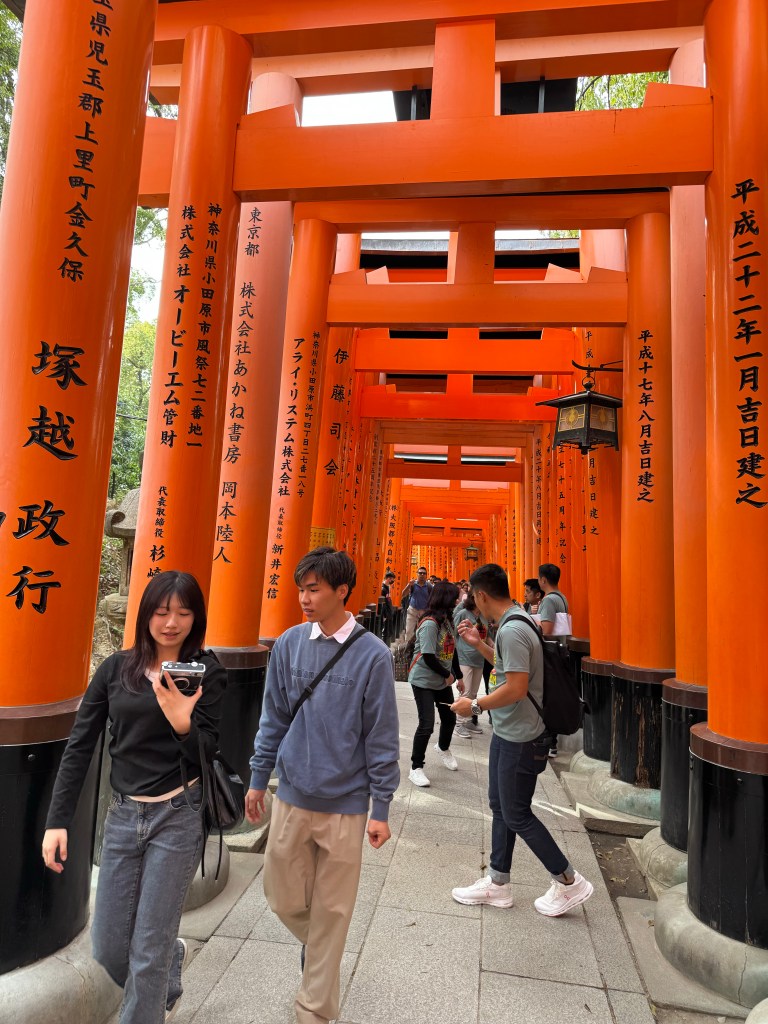
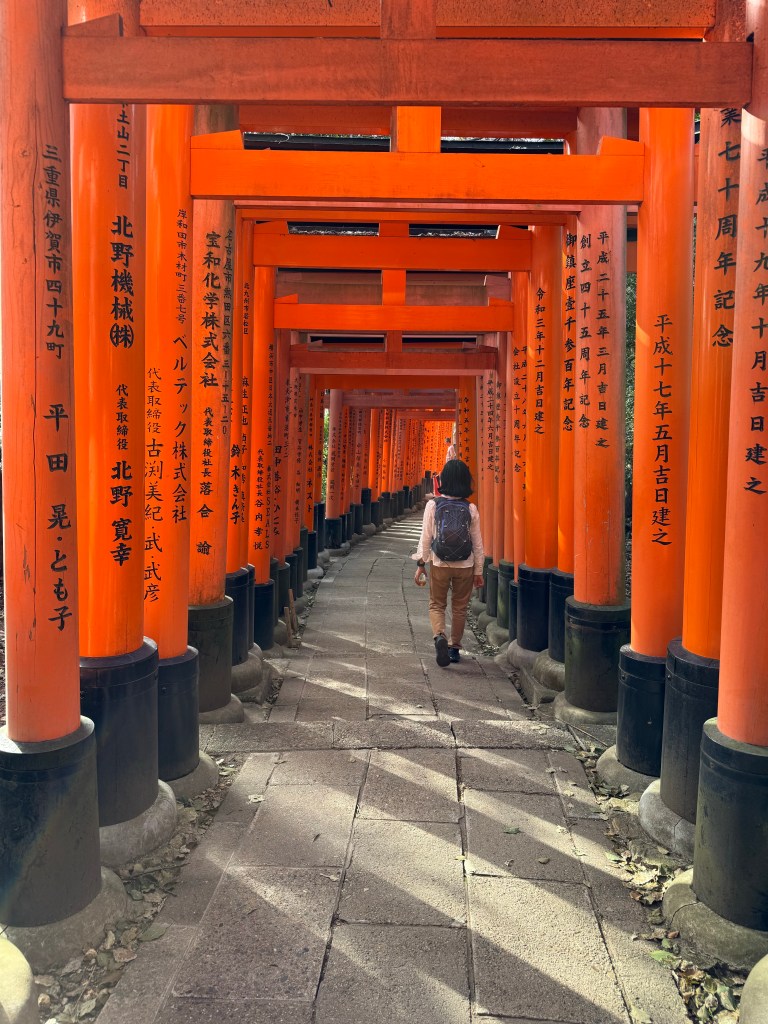
The seemingly endless path of vibrant orange torii gates takes the average person 2 hours (774’ above sea level) to climb. It’s an iconic image of Kyoto.
Looking fresh at first torii. Endless torii. Never ending torii. Namiyo has left the others behind in the dust.
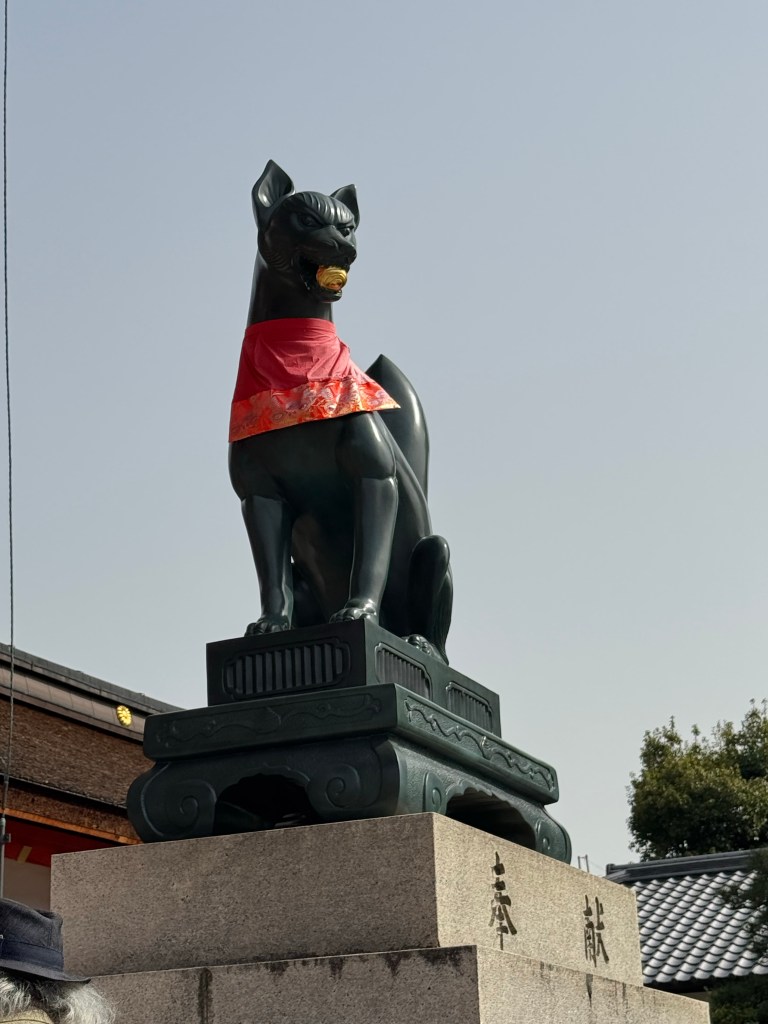
Fushimi Inairi Shrine is dedicated to Inairi the god of rice. Foxes are thought to be messengers of Inairi. The pairing of Agyō (open mouth gate statue) and Ungyō (closed mouth gate statue) governs the beginning and ending of all things.
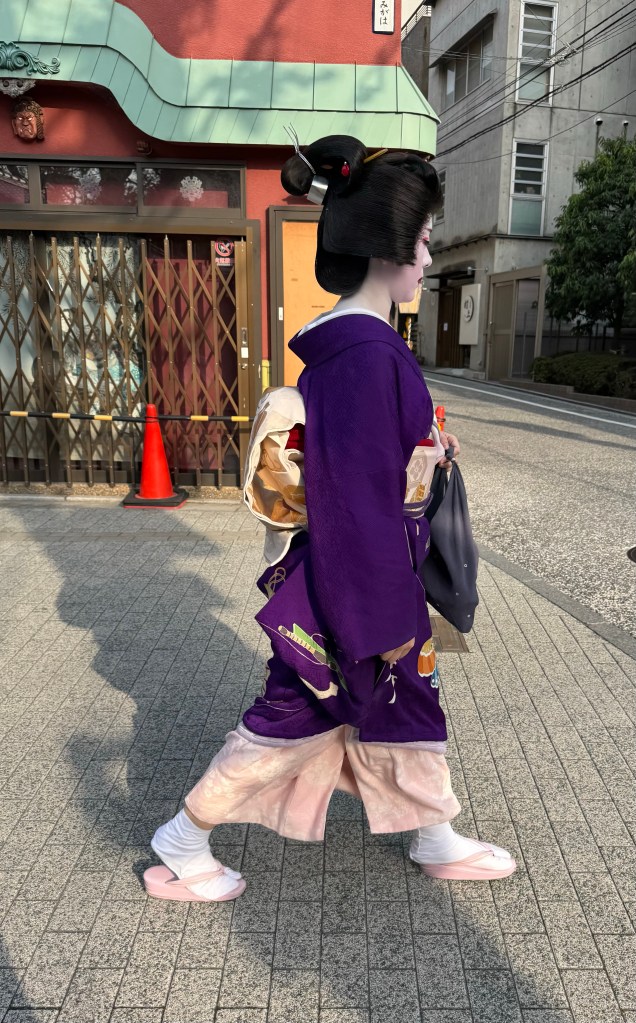
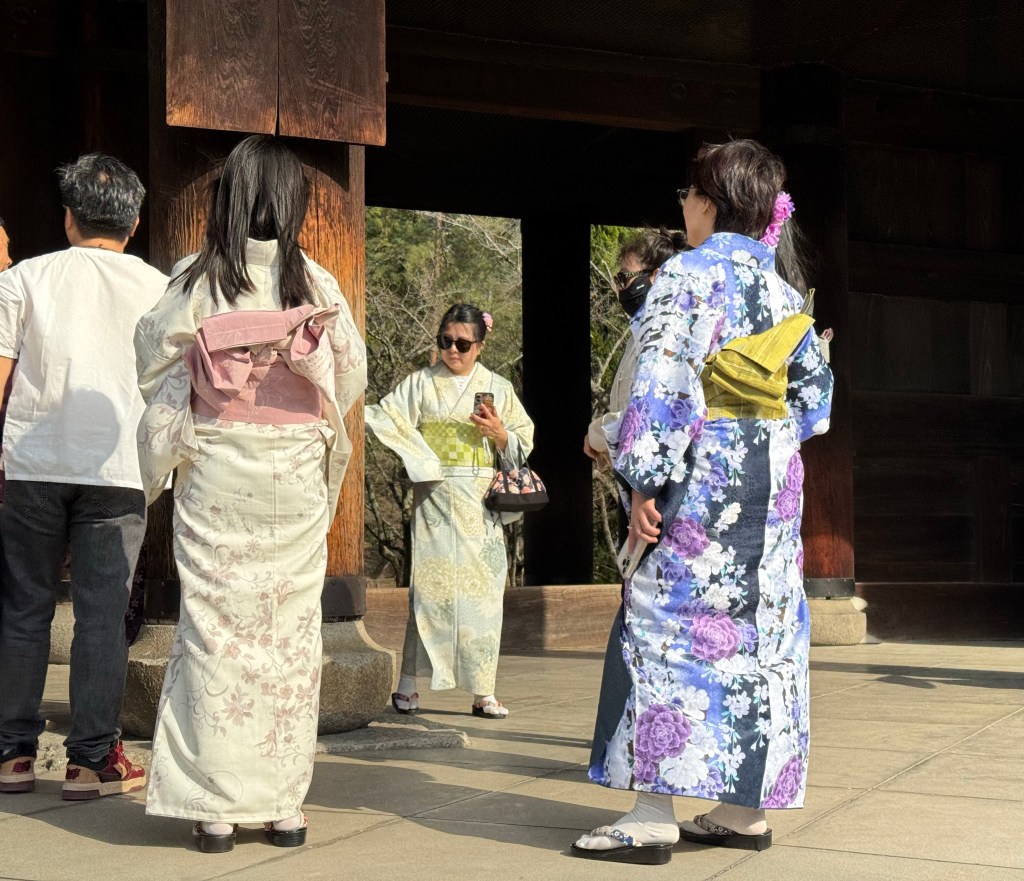
Fushimi Inairi Shrine Gate. Fox. Temple gate statues on right side have an open mouth. These statues are called Agyō representing the first sound in Sanskrit.Fox. Temple gate statues on left side have an open mouth. These statues are called Ungyō representing the last sound in Sanskrit.Japanese women wearing a kimono walk with toes turned inward (pigeon toed). Chinese women wearing a kimono walk with toes turned outward (duck foot).



















 Linda Scandore